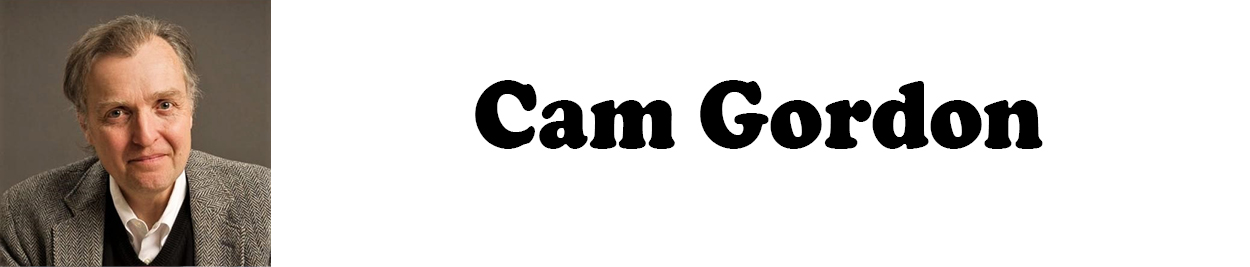


 BY DAVE GUTKNECHT
I’ve learned to hate the
Russians all through my whole life
If another world war comes, it’s them we must fight
To hate them and fear them, to run and to hide
And to never ask questions, with God on our side
—Bob Dylan, 1964
Russophobia—hatred and fear of Russia—is so pervasive it is unrecognized by many. In a media-saturated world, the dominant narratives are the waters surrounding us.
To maintain approved reporting, all U.S. mainstream media have CIA contracts and hirelings on their staff. This was confirmed as far back as 1975 by the CIA director (a sequence still on YouTube), under duress from questioning by Sen. Frank Church during the only serious Congressional investigation of the agency. Powerful institutions support the work of shaping media narratives.
Russophobia has deep roots. Its religious history dates to the Eastern Orthodox split with the Roman Catholic Church in 1054, and Moscow later became home to the Russian Orthodox Church. To religious division in Ukraine and elsewhere, add ethnic prejudice against Russia—all in service to power. Slavs were demonized, and Russians were conflated with Mongols (whose Moscow khanate ended five centuries ago).
Modern Russophobia was sharpened in European imperial wars, including the 1850s Crimean War—an attempt, now being repeated, to restrict Russia’s warm water port on the Black Sea.
See these resources for more about the roots of Russophobia:
*Glen Diesen, Norwegian academic and author of Russophobia: “Propaganda in International Politics” (2022), in a one-hour discussion with Prof. Dan Klein in late 2024, found on YouTube.
*A 2017 book by atty. Dan Kovalik, “The Plot to Scapegoat Russia” (Sky Horse Publishing paperback).
*At consortiumnews.com, an interview with British author Richard Sakwa, “Russia since Perestroika” August 2025.
The U.S. inherited from the British a deep antagonism to Russia as well as sophisticated propaganda tradecraft. Police and spy agencies targeted working-class movements that threatened financiers and owners. Following the Bolshevik Revolution, the U.S. joined the failed 1919 Allied invasion and attempted overthrow of Russia. After 1945, we took in top Nazi spies and scientists for our anti-communist strategy and began threatening nuclear war on Russia.
After 1991, the ideological justification for that war was seemingly lost. But there was no “peace dividend.” The U.S. rulers’ drive for hegemony and its hostility toward a nuclear-armed Russia were as strong as ever. Years of NATO expansion led to war in Ukraine.
Russophobia prepared us for Russiagate, and Russiagate strengthened Russophobia. The Russiagate campaign against Trump followed and was prompted by the presidential candidate’s advocacy of diplomacy and improved relations with Russia—a huge red flag for the war planners and the Washington unipar-
ty. Now the acts of Obama, Biden, Brennan, Comey, Clapper, and associated officials in generating the Russiagate accusations have been documented by Director of National Intelligence Tulsi Gabbard. They reveal an elaborate, never-proven fraud alleging Trump “collusion” and Russian election “interference.”
But you’ll have to look elsewhere than mainstream media to hear what Gabbard says or to hear such skeptics as Aaron Mate, Jeffrey Sachs, Glenn Greenwald, Larry Johnson, and Glenn Diesen.
A sea of falsehoods surrounds the US war on Russia, aimed at generating public consent: That the West never promised not to expand NATO. That Russians didn’t vigorously protest NATO expansion. That the Ukraine war was “unprovoked.” That Russia is weak, “a gas station masquerading as a country.” That Russia can be defeated by Western financial sanctions and weapons. That more weapons for Ukraine will reverse its defeat.
Add demonization of the enemy, essential to propaganda: Thomas Freidman says (8/20) Trump is guilty of “Un-American anti-Westernism,” that Putin is in Ukraine “to break up the West in revenge,” that Putin wants “all” of Ukraine, that Putin is “a bad guy, a coldblooded murderer,” and Tulsi Gabbard is a “Putin fan girl.” All lies, from the foremost NYT columnist. And the other chief NYT voice for war on Russia, Masha Gessen, repeats the “Munich failure” theme and that Ukraine’s “security” requires membership in NATO. By the fourth year of war, still no lessons learned.
Economic sanctions against Russia and others—unprecedented actions against more than thirty nations and thousands of businesses and individuals—are illegal by UN standards but have nevertheless resulted in a stronger Russia and a weaker Europe. To overall geopolitical risk, add tariff chaos and the looming threat of debt defaults. The U.S. is damaging the international financial system, leading many countries to build other trade relations. And it is revealing inescapable limits—financial, military, diplomatic—to U.S. power.
Alternatives offering deeper information and broader perspectives are still available, such as online interviews by Glenn Diesen, Judge Napolitano and Pascal Lottaz of veteran diplomats, military officers, and intelligence officials.